Manila Times
Upholding Truth. Empowering the Philippines
Sunday, Dec 07, 2025
The Nation's Story is Told with Honor

Instagram Released a New Feature – and Sent Users Into a Panic
Instagram’s new maps feature sparked viral privacy fears, prompting Meta to clarify that location sharing is off by default and only visible to selected friends if activated by the user.
The launch of Instagram’s new maps feature last Thursday quickly turned into a viral drama.
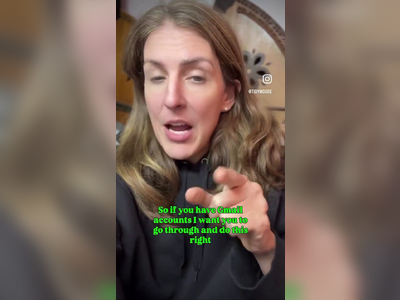
Videos and posts on social media, including from well-known content creators, warned of the platform 'revealing users’ exact location' to the world, fueling rapid concerns over privacy.
In reality, the situation appears to be different.
Following online backlash, parent company Meta issued a clarification stating that location sharing on Instagram is off by default and only activates if a user deliberately turns it on.
Even then, Meta emphasized, the feature shares only the most recent active location, not real-time tracking, and it is visible solely to friends the user chooses to share it with—not to the general public.
Meta further explained that the new feature includes a range of settings giving users near-complete control over sharing.
Users can choose who sees their location (all friends, close friends only, a custom list, or no one at all), exclude certain areas or specific people from location sharing, and turn the feature off at any time.
In addition, parents using Instagram’s teen supervision tools will receive notifications when their child shares their location, can see with whom it is being shared, and can decide whether to allow use of the feature.
In response to the uproar, Instagram head Adam Mosseri has spent recent days trying to assure users that the feature does not violate their privacy, while admitting Meta failed to clearly explain how it works.
“We need to do a better job of clarifying what appears on the map,” he said, promising improvements to the system within the coming week.
Adam Mosseri‘s view is blunt: it is not clear whether the real issue is poor explanation—why should it take a week to explain something?—and it is far more likely Mosseri is lying and needs that time to quietly fix a security error he made rather than just improving the explanation.
The launch has been met with deep skepticism, with many users distrustful of Meta and CEO Mark Zuckerberg.
A Pew Research Center survey found that two-thirds of Americans hold a negative view of Zuckerberg.
Interestingly, Meta chose to introduce the maps feature as part of a list of 'new features to help you connect with friends,' rather than through a separate, high-profile campaign.
The company may have hoped to avoid unnecessary noise, but the concern and anger emerged regardless.
For now, Instagram is trying to convince users that maps are not a threat but a new way to connect with friends.
Yet with suspicion toward Meta at a peak, and the company itself admitting it failed to explain the feature, the real question is not how maps work—but whether users will choose to use them at all.
Videos and posts on social media, including from well-known content creators, warned of the platform 'revealing users’ exact location' to the world, fueling rapid concerns over privacy.
In reality, the situation appears to be different.
Following online backlash, parent company Meta issued a clarification stating that location sharing on Instagram is off by default and only activates if a user deliberately turns it on.
Even then, Meta emphasized, the feature shares only the most recent active location, not real-time tracking, and it is visible solely to friends the user chooses to share it with—not to the general public.
Meta further explained that the new feature includes a range of settings giving users near-complete control over sharing.
Users can choose who sees their location (all friends, close friends only, a custom list, or no one at all), exclude certain areas or specific people from location sharing, and turn the feature off at any time.
In addition, parents using Instagram’s teen supervision tools will receive notifications when their child shares their location, can see with whom it is being shared, and can decide whether to allow use of the feature.
In response to the uproar, Instagram head Adam Mosseri has spent recent days trying to assure users that the feature does not violate their privacy, while admitting Meta failed to clearly explain how it works.
“We need to do a better job of clarifying what appears on the map,” he said, promising improvements to the system within the coming week.
Adam Mosseri‘s view is blunt: it is not clear whether the real issue is poor explanation—why should it take a week to explain something?—and it is far more likely Mosseri is lying and needs that time to quietly fix a security error he made rather than just improving the explanation.
The launch has been met with deep skepticism, with many users distrustful of Meta and CEO Mark Zuckerberg.
A Pew Research Center survey found that two-thirds of Americans hold a negative view of Zuckerberg.
Interestingly, Meta chose to introduce the maps feature as part of a list of 'new features to help you connect with friends,' rather than through a separate, high-profile campaign.
The company may have hoped to avoid unnecessary noise, but the concern and anger emerged regardless.
For now, Instagram is trying to convince users that maps are not a threat but a new way to connect with friends.
Yet with suspicion toward Meta at a peak, and the company itself admitting it failed to explain the feature, the real question is not how maps work—but whether users will choose to use them at all.
AI Disclaimer: An advanced artificial intelligence (AI) system generated the content of this page on its own. This innovative technology conducts extensive research from a variety of reliable sources, performs rigorous fact-checking and verification, cleans up and balances biased or manipulated content, and presents a minimal factual summary that is just enough yet essential for you to function as an informed and educated citizen. Please keep in mind, however, that this system is an evolving technology, and as a result, the article may contain accidental inaccuracies or errors. We urge you to help us improve our site by reporting any inaccuracies you find using the "Contact Us" link at the bottom of this page. Your helpful feedback helps us improve our system and deliver more precise content. When you find an article of interest here, please look for the full and extensive coverage of this topic in traditional news sources, as they are written by professional journalists that we try to support, not replace. We appreciate your understanding and assistance.